Selective vs. Full Demolition: Which One Does Your Project Need?
Most owners ask the wrong question first.
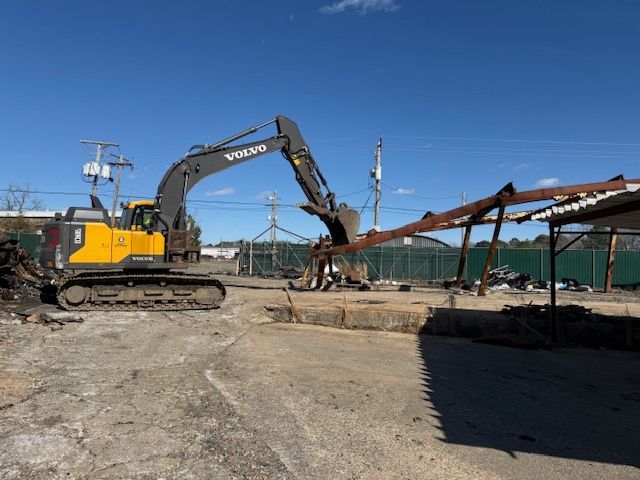
The call usually starts the same way: "We need this building torn down."
Sometimes that's right. Often it isn't — and the owner doesn't find out until somebody's walked the site and asked what they're actually trying to end up with.
Because the real question isn't how much of the building comes down. It's what's still running while we work.
Answer that, and the rest of the decision makes itself.
We walk it. That's the whole method, and it's not complicated — it's just that somebody has to actually do it.
We look at what's standing, what's staying open, what's structurally sound, and what you're trying to end up with. Then we tell you which approach fits, in writing, including the parts you didn't ask about. If the walkthrough says you don't need a teardown, that's what we'll tell you. We'd rather have the right project than the bigger one.
Born to Build serves commercial and governmental clients across Arkansas from Maumelle to Mountain Home.
Arkansas Contractors Board License 0466120426. CAGE 10PY4.
Full demolition: the structure goes away
Full demolition means the building comes down to grade. Structure, slab, foundation if you want it, everything hauled off, site graded and ready for whatever's next.
It's mechanical work. Machines do the heavy lifting, the sequence is straightforward, and it moves fast — because there's nothing left standing that we have to protect.
Full demolition is usually right when:
- You're redeveloping the site, not the building
- The structure is compromised — fire, water, foundation, age
- The layout is unfixable and you're not sentimental about it
- Nothing on the property stays operational during the work
- The building has outlived its use and it's costing you to keep it standing
The clarifying test: is there anything in this building you'd be upset to lose? If no, stop overthinking it. Full teardown is the clean answer, and clean answers finish on schedule.
Selective demolition: the building stays, parts of it don't
Selective demolition means removing specific portions while the rest of the structure stays intact and, often, stays in use.
Strip an interior to the studs. Take out one wing. Remove a structure that shares a wall with a business that opens at eight tomorrow morning. Pull out everything but the shell and the slab so somebody can build something new inside it.
It's slower per square foot, and the reason is simple: you're not just removing material, you're protecting everything you're not removing. More hand work. More layout. More care about what's load-bearing and what's just in the way.
Selective demolition is usually right when:
- The shell, slab, or frame is sound and you want to keep it
- A tenant, department, or operation has to stay open through the work
- You're remodeling or repositioning the space, not clearing the site
- The building shares a wall — strip center, downtown block, connected structures
- Only part of the footprint is the problem
The clarifying test: is anything about this building worth keeping? A sound structure is worth real money. So is not shutting your tenant down for a quarter.
The four questions that actually decide it
Forget square footage for a minute. Run these:
1. What's the end state?
A parking lot and a renovated suite are different projects. Start at the finish and work backward. Most owners start at the wrecking ball and work forward, which is how you end up removing things you needed.
2. Is anything staying open?
An occupied neighbor, a tenant on a lease, a department that can't relocate, a customer entrance that has to work — any one of those turns this into selective work whether you planned for it or not. This is the single biggest driver and it's the one owners mention last, usually about forty minutes into the walkthrough.
3. Is the structure sound?
If the frame and slab are good, keeping them is often the best value on the table. If they're not, keeping them is the most expensive decision you'll make on this project, and you'll make it twice.
4. What are you doing with the site afterward, and when?
Timing changes the answer. If the next phase starts in six weeks, the fastest path down isn't always the fastest path to ready.
The mistake we see in both directions
Owners who over-demolish. They tear down a structurally sound shell because "tear it down" was the first phrase anybody said out loud, and nobody challenged it. Then they rebuild something remarkably similar to what was standing there in March.
Owners who under-demolish. They ask for a strip-out on a building with real structural problems, and every week the crew finds something else. Scope creeps. Change orders stack. The project that was supposed to be surgical turns into a teardown with extra steps and a longer schedule.
Both mistakes come from the same place: deciding the method before anybody assessed the building.
What changes on your site
If you've only ever watched a full demolition, selective work looks different, and it's worth knowing what you're buying:
- Sequencing matters more. What comes out first determines what's safe to touch second. Nothing moves fast on a job where the plan is being invented at 7 a.m.
- Dust and noise control is a real line of work, not an afterthought — especially with anyone occupying the building.
- Hours may not be yours to pick. Occupied buildings mean working around business hours, sometimes nights, sometimes weekends.
- Access gets negotiated. Where crews enter, where debris exits, and where your customers walk are three different paths that can't cross.
- The paperwork starts before the equipment does. Every commercial demolition in Arkansas comes with permitting and regulatory requirements that have to be handled and scheduled ahead of the work — full teardown or selective. We handle that side, and we start it early, because it's the part that quietly costs people weeks when nobody's watching the calendar.
FAQ
What is selective demolition?
Selective demolition is the removal of specific parts of a structure — an interior, a wing, one section of a shared building — while the rest stays intact and often stays in use. It's slower and more precise than full demolition because the crew is protecting everything it isn't removing.
What's the difference between selective and full demolition?
Full demolition brings the entire structure down to grade and clears the site. Selective demolition removes only targeted portions. The deciding factors are what you're keeping, whether anything stays operational during the work, and whether the existing structure is sound.
Can a business stay open during selective demolition?
Often, yes — it's one of the main reasons owners choose selective work. It requires sequencing, dust and noise control, and separating crew access from customer access, all of which need to be planned before work starts rather than improvised on site.
How do I know which type of demolition my project needs?
Start with the end state and work backward, then ask whether anything stays open and whether the structure is sound. An on-site walkthrough is the only reliable way to answer it — the method should be chosen after the building has been assessed, not before.